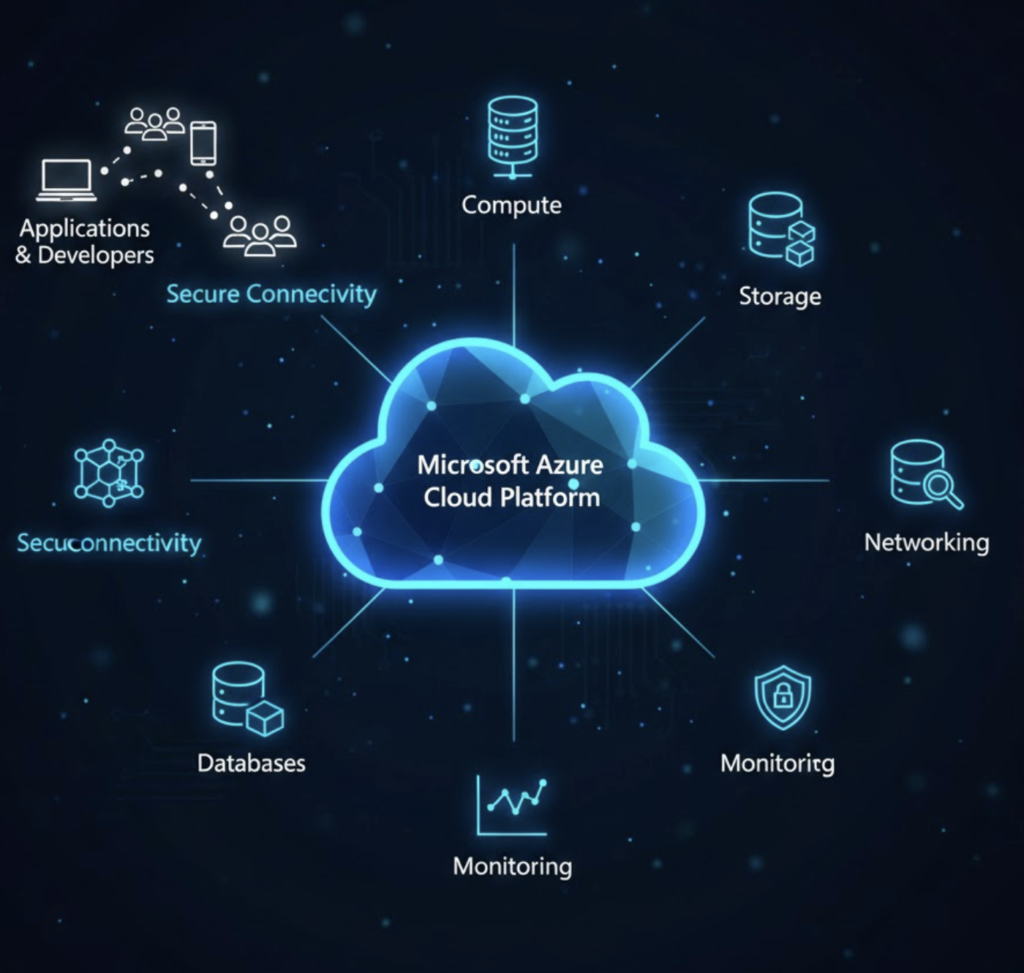
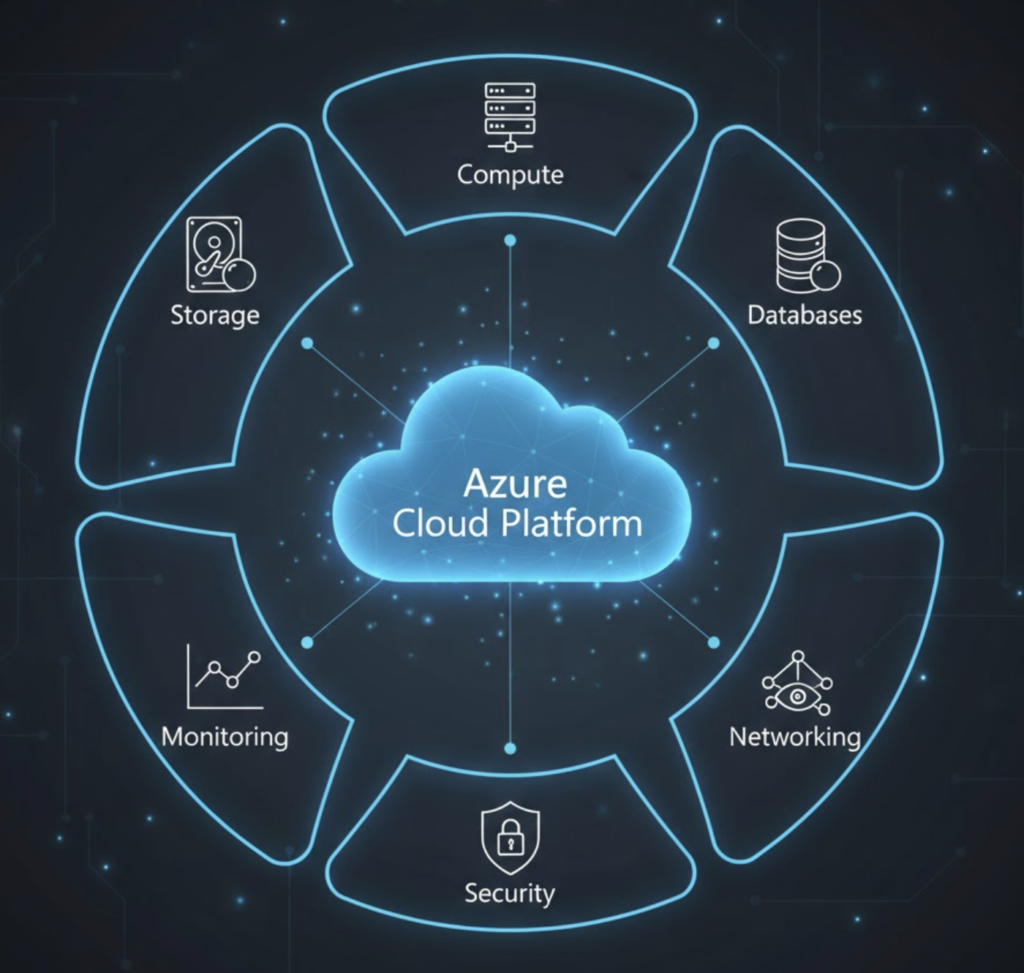
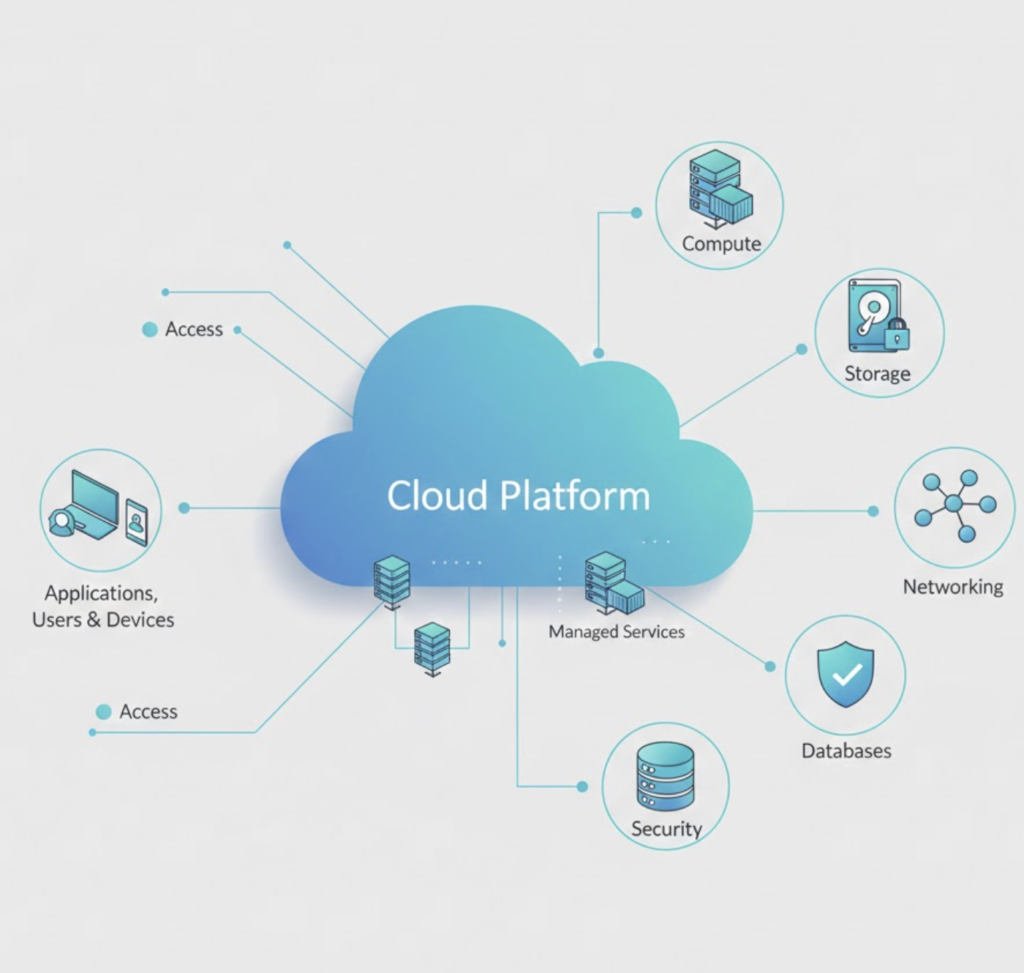
Cloud computing has transformed the way modern applications are built, deployed, and managed. Among the leading cloud platforms available today, Microsoft Azure stands out as a powerful and flexible solution used by organizations of all sizes. From hosting simple websites to running enterprise-grade workloads, Azure provides a wide range of cloud services designed to support scalability, security, and innovation.
This article offers a clear and practical introduction to Microsoft Azure, covering its core concepts, architecture, and key benefits.
What Is Microsoft Azure?

Microsoft Azure is a cloud computing platform developed by Microsoft that delivers computing resources over the internet. Instead of maintaining physical servers and data centers, users can access on-demand cloud services such as virtual machines, storage, networking, databases, and application platforms.
Azure follows a pay-as-you-use pricing model, which means organizations only pay for the resources they consume. This approach helps reduce upfront infrastructure costs while allowing systems to scale dynamically based on demand.
Understanding Cloud Computing
At its core, cloud computing enables users to consume IT resources as services rather than managing hardware directly. These resources are hosted in Microsoft-managed data centers and delivered securely over the internet.
Cloud computing offers several advantages:
- Reduced infrastructure and maintenance overhead
- Faster deployment of applications
- High availability and disaster recovery options
- Global reach with minimal operational effort
Azure supports multiple cloud deployment strategies, including public cloud, private cloud, and hybrid cloud, making it suitable for diverse business and compliance requirements.
Cloud Service Models in Azure
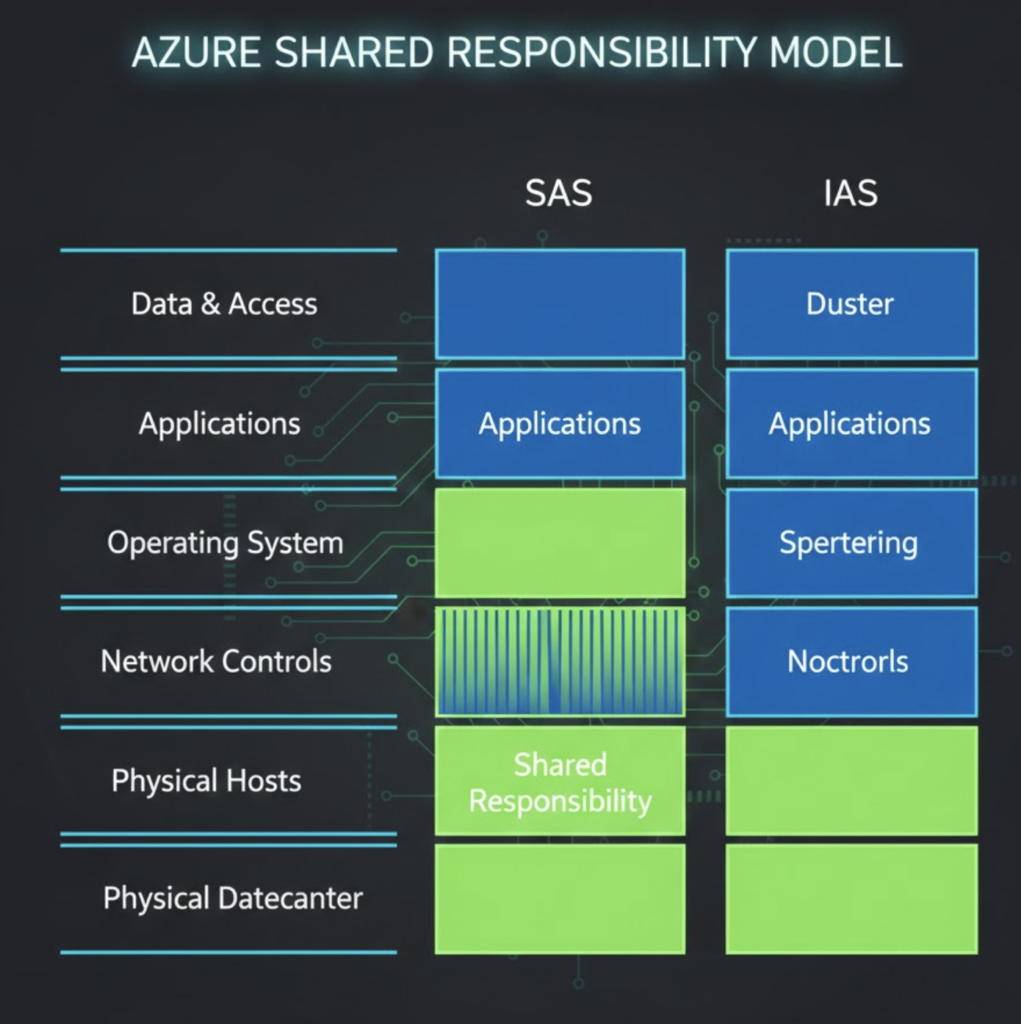
Microsoft Azure provides services across all major cloud service models:
Infrastructure as a Service (IaaS)
Allows users to provision virtual machines, storage, and networking while retaining control over operating systems and applications.
Platform as a Service (PaaS)
Provides a managed environment where developers can build and deploy applications without worrying about underlying infrastructure.
Software as a Service (SaaS)
Delivers ready-to-use software applications that are fully managed by Microsoft and accessible through a web browser.
These models allow organizations to choose the level of control and responsibility that best fits their needs.
Azure Global Infrastructure
Azure operates on a global network of data centers distributed across multiple regions worldwide. Each region consists of one or more data centers designed for high availability and fault tolerance.
Key architectural components include:
- Regions: Geographic locations containing Azure data centers
- Availability Zones: Isolated data centers within a region to protect against failures
- Geographies: Groups of regions designed for data residency and compliance
This architecture ensures reliable performance, business continuity, and compliance with local regulations.
Core Azure Services
Azure offers a comprehensive portfolio of cloud services, including:
- Compute Services: Virtual Machines, Scale Sets, and Containers
- Networking: Virtual Networks, Load Balancers, VPNs, and Firewalls
- Storage: Blob Storage, File Storage, and Disk Storage
- Databases: Azure SQL Database, MySQL, PostgreSQL, and NoSQL options
- Application Services: Web Apps, APIs, and serverless functions
- Monitoring and Management: Tools for logging, metrics, and automation
These services can be combined to build highly scalable and resilient cloud solutions.
Security and Governance in Azure
Security is a foundational aspect of Microsoft Azure. The platform follows a shared responsibility model, where Microsoft secures the underlying infrastructure, while customers are responsible for securing their applications and data.
Azure provides:
- Centralized identity and access management
- Network isolation and encryption
- Built-in compliance certifications
- Continuous monitoring and threat detection
Additionally, Azure offers governance tools to manage costs, enforce policies, and maintain control across multiple environments.
Why Organisations Choose Microsoft Azure
Microsoft Azure is widely adopted due to several key benefits:
- Scalability: Easily scale resources up or down
- Reliability: High availability through global infrastructure
- Flexibility: Supports multiple operating systems, languages, and frameworks
- Cost Optimization: Pay only for what you use
- Enterprise Integration: Seamless integration with Microsoft tools and services
These advantages make Azure suitable for startups, enterprises, and mission-critical workloads.
Conclusion
Microsoft Azure provides a robust and versatile cloud platform that enables organizations to modernize their infrastructure and accelerate innovation. By offering a wide range of services, global availability, and strong security capabilities, Azure helps businesses focus on building solutions rather than managing infrastructure.
For anyone beginning their cloud journey, understanding Azure fundamentals is an essential step toward working with modern, scalable cloud environments.
References