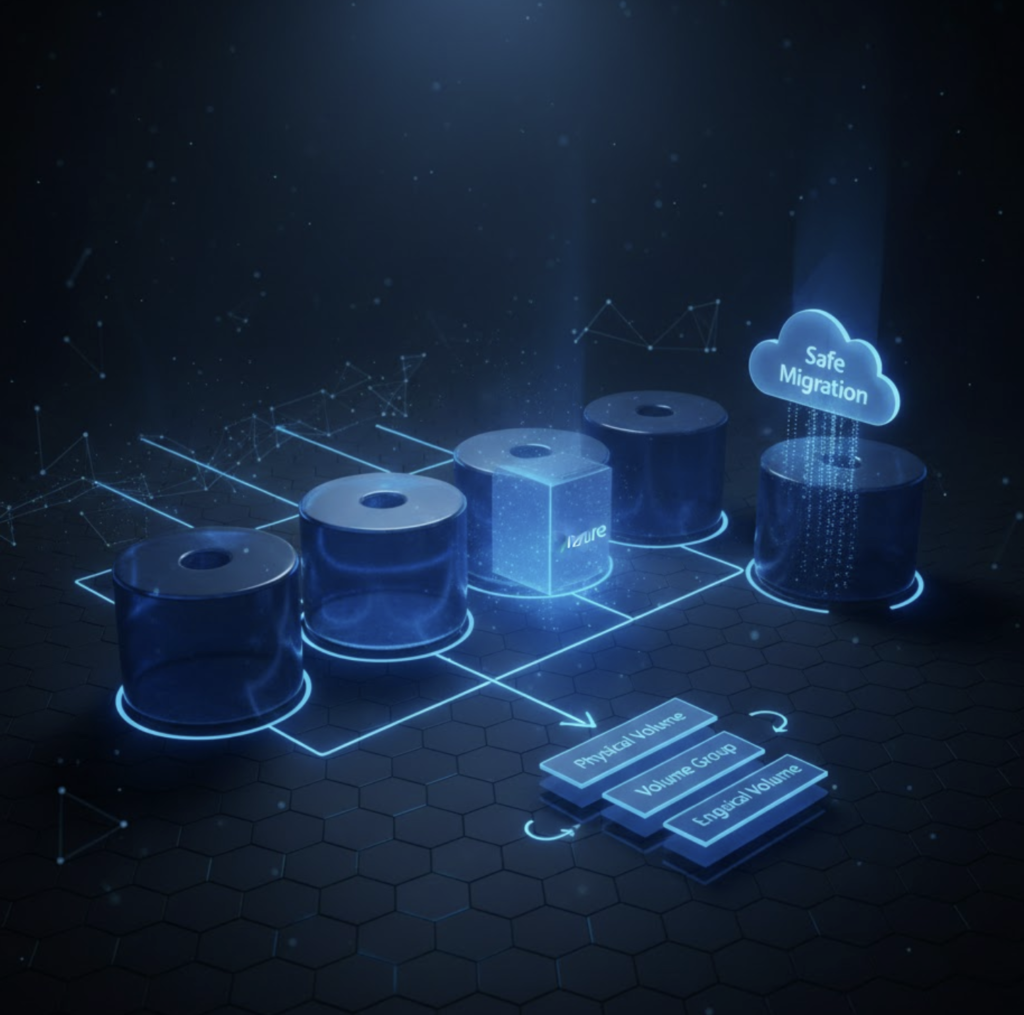
How to Safely Remove an LVM Disk from an Azure/AWS VM

Managing storage in production environments requires precision, especially when working with LVM-backed filesystems on cloud infrastructure. This guide documents a production-safe procedure to: This process ensures zero data loss and controlled disk decommissioning. Step 1: Stop the Application Before performing any filesystem shrink or LVM modification, stop the service using the volume. systemctl stop cassandra.service […]

How to Safely Remove an LVM Disk from an Azure/AWS VM Read More »
How to Monitor RHEL Servers Using Grafana and Prometheus

Modern infrastructure demands real-time visibility into server performance. Whether you’re a System Administrator, DevOps Engineer, or SRE, monitoring Linux servers is critical for ensuring performance, reliability, and uptime. In this blog, you’ll learn how to monitor a RHEL VM using Prometheus Node Exporter and Grafana, starting from scratch and ending with powerful dashboards and visualizations.

How to Monitor RHEL Servers Using Grafana and Prometheus Read More »

How to Monitor MongoDB with Prometheus and Grafana

Monitoring MongoDB is critical for maintaining database performance, availability, and reliability in production environments. Metrics such as connections, memory usage, query performance, replication lag, and disk I/O help teams detect issues before they impact applications. In this blog, you’ll learn how to monitor MongoDB using MongoDB Exporter and Grafana, starting from installation and ending with

How to Monitor MongoDB with Prometheus and Grafana Read More »

How to Monitor Redis with Prometheus, Grafana, and Redis Exporter

Redis is widely used as an in-memory data store, cache, and message broker for high-performance applications. Because Redis often sits on the critical path of application performance, even small issues like memory saturation, slow commands, or connection spikes can lead to serious outages. In this blog, you’ll learn how to monitor Redis using Redis Exporter,

How to Monitor Redis with Prometheus, Grafana, and Redis Exporter Read More »

How to Monitor MySQL with Prometheus, Grafana, and MySQL Exporter

Monitoring MySQL databases is essential for ensuring performance, availability, and reliability in production environments. Without proper monitoring, issues such as high query latency, connection exhaustion, replication lag, or disk bottlenecks can go unnoticed until they impact applications. In this blog, you’ll learn how to monitor MySQL using MySQL Exporter, Prometheus, and Grafana, starting from setup

How to Monitor MySQL with Prometheus, Grafana, and MySQL Exporter Read More »

How to Centralize Linux Logs Using Grafana Loki and Promtail

Logs are the backbone of troubleshooting, security auditing, and observability. Traditional log management systems can be heavy, expensive, and complex. Grafana Loki, combined with Promtail, offers a lightweight, scalable, and cost-effective log aggregation solution, tightly integrated with Grafana dashboards. In this blog, you’ll learn how to set up Grafana Loki with Promtail on a Linux

How to Centralize Linux Logs Using Grafana Loki and Promtail Read More »

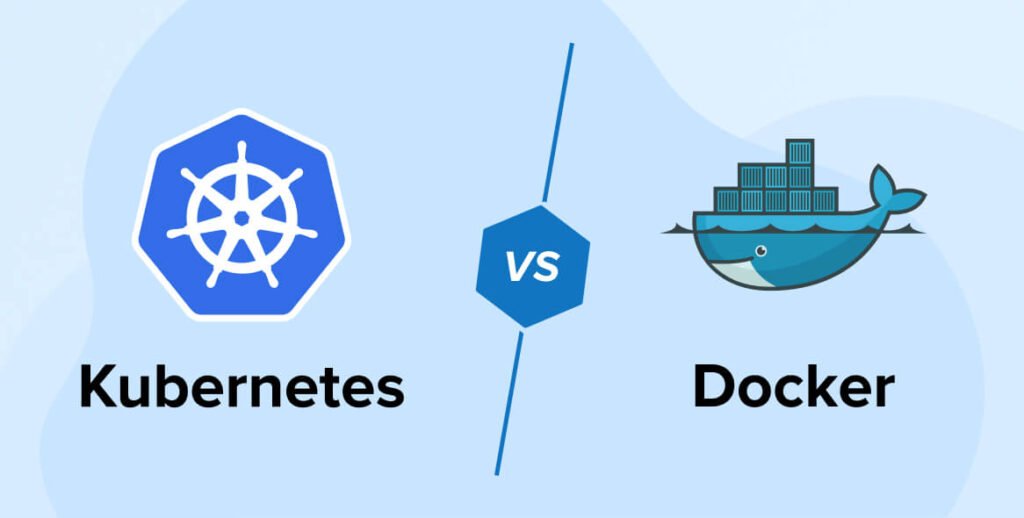
Why Kubernetes Came Into the Picture: A Historical Perspective on Docker vs Kubernetes

In modern cloud-native architecture, containers and orchestration are foundational concepts. Two names dominate this space: Docker and Kubernetes. A common question arises: If Docker already existed, why did Kubernetes come into the picture at all?To answer this, we need to look at the historical evolution of application deployment, the limitations Docker faced at scale, and

Why Kubernetes Came Into the Picture: A Historical Perspective on Docker vs Kubernetes Read More »

MySQL Fundamentals: Installation and Replication on Linux

MySQL is an open-source relational database management system widely used in production environments. It follows the relational model, storing data in structured tables and using SQL as its query language. MySQL is commonly chosen for applications that require reliable transactional processing, predictable performance, and straightforward operational management. It is frequently used in web applications, internal

MySQL Fundamentals: Installation and Replication on Linux Read More »

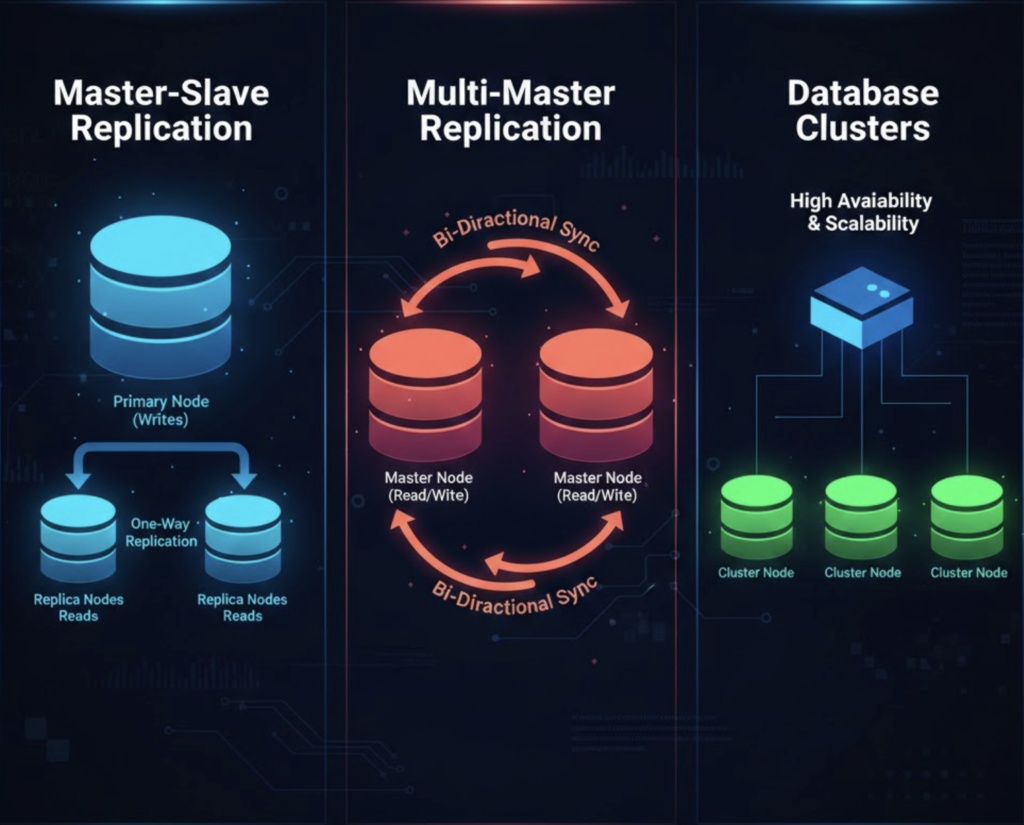
Database Replication Explained: Master–Slave, Multi-Master, and Clusters

Understand database replication concepts, types, and use cases including master–slave, multi-master, and clustered replication. What Is Database Replication? Database replication is the process of copying and synchronizing data across multiple database instances. The primary goals are high availability, fault tolerance, scalability, and disaster recovery. Replication is a core feature across most modern relational and NoSQL

Database Replication Explained: Master–Slave, Multi-Master, and Clusters Read More »