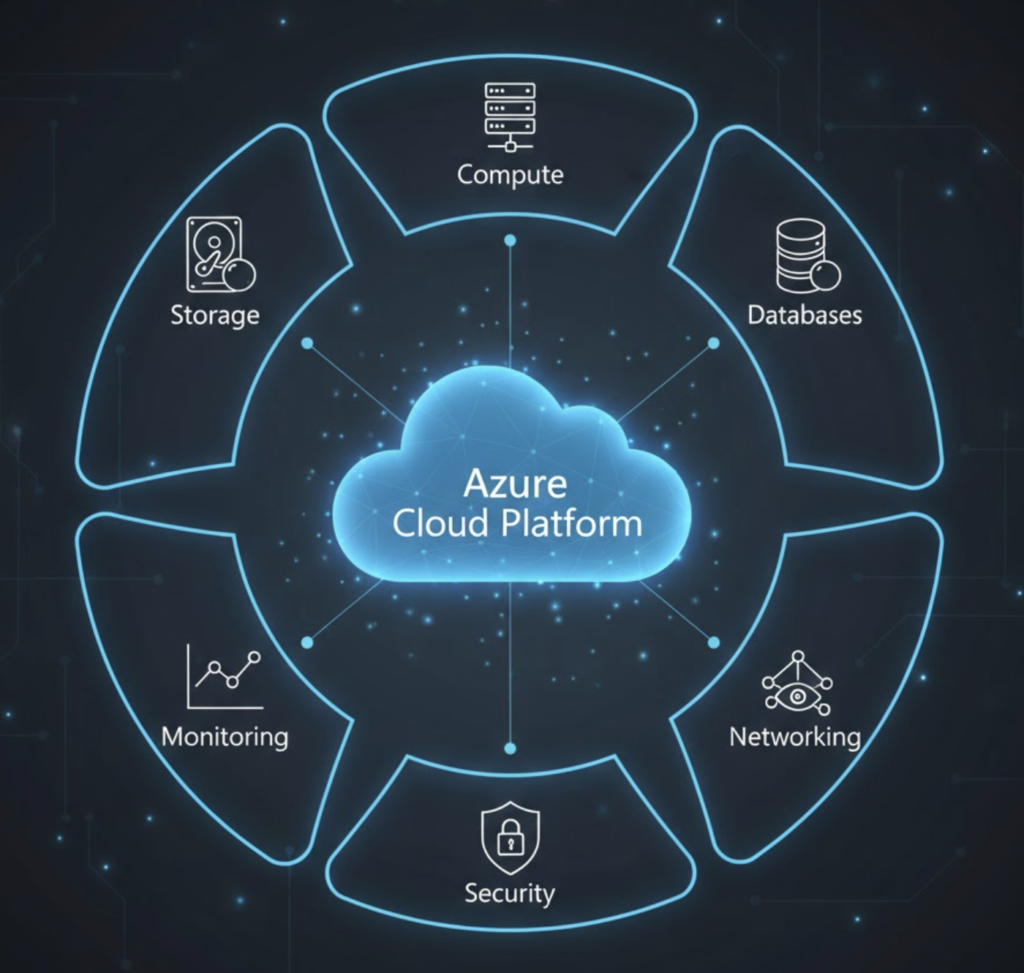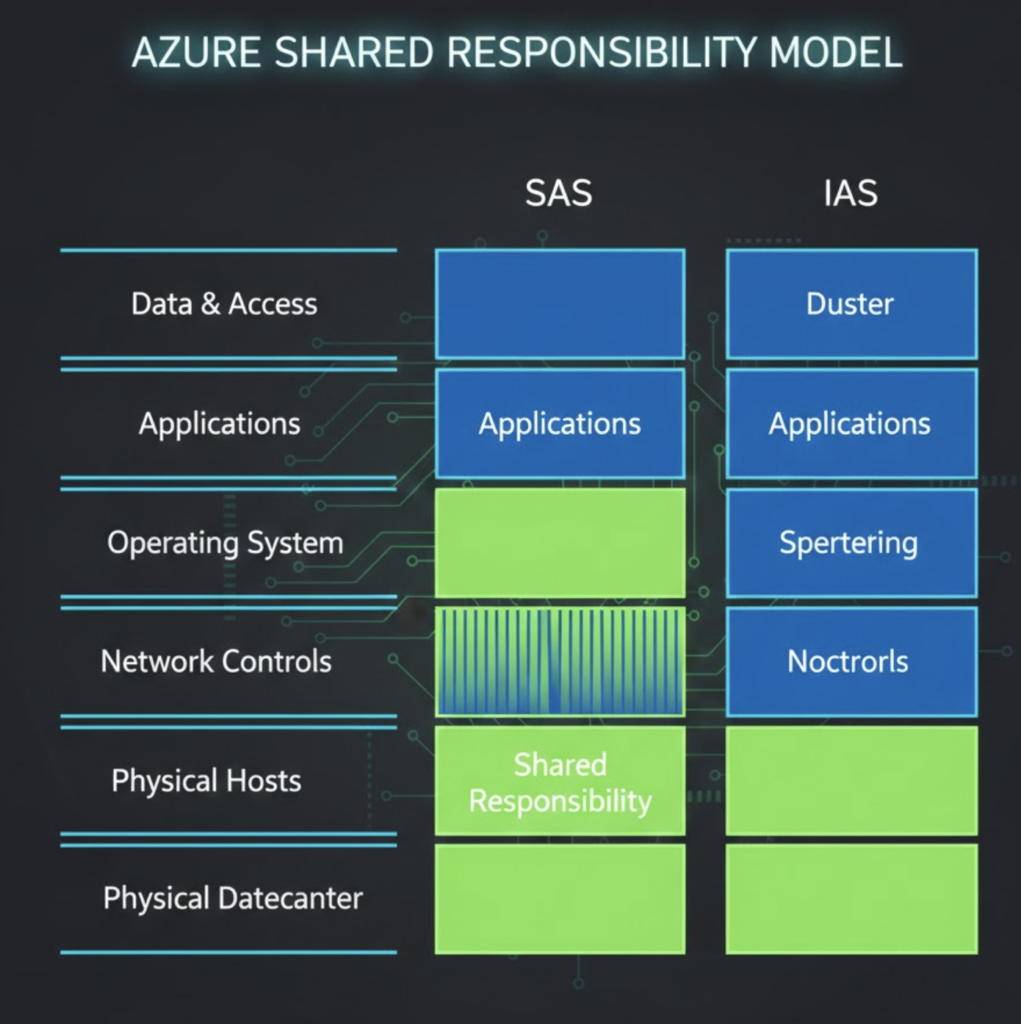

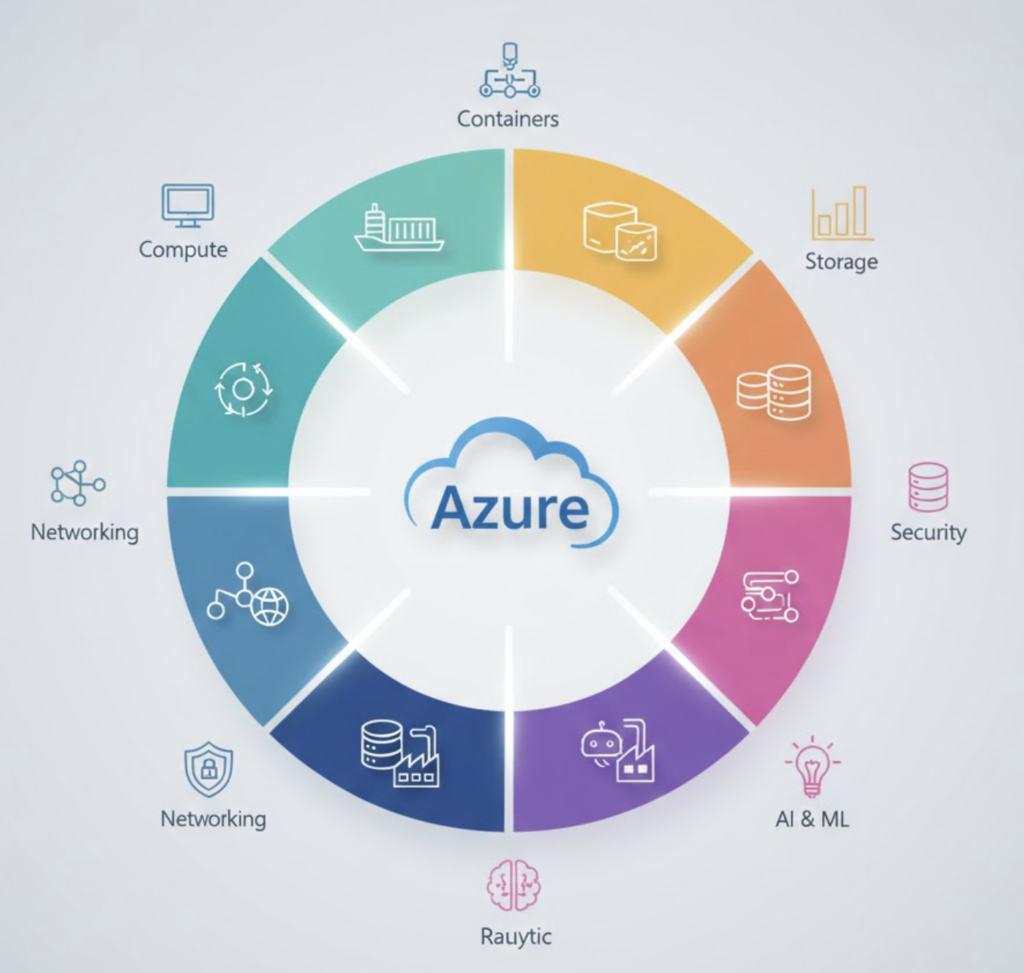
Microsoft Azure offers a wide range of cloud services designed to help organizations build, deploy, and manage applications efficiently. These services are grouped into categories based on functionality, making it easier to design scalable, secure, and high-performance cloud solutions.
Azure services support various workloads, including web applications, enterprise systems, databases, analytics, artificial intelligence, and DevOps automation.
1. Compute Services
Azure Compute services provide the processing power required to run applications and workloads in the cloud.
Key offerings include:
- Virtual Machines (VMs): Run Windows or Linux servers on demand
- Virtual Machine Scale Sets: Automatically scale VMs based on load
- Azure App Service: Host web applications and APIs without managing servers
- Azure Functions: Serverless compute for event-driven workloads
These services allow organizations to scale resources dynamically while paying only for what they use.
2. Storage Services
Azure Storage services are designed to store large volumes of data securely and reliably.
Common storage options include:
- Blob Storage: Object storage for unstructured data such as images, videos, and backups
- File Storage: Cloud-based file shares accessible from anywhere
- Disk Storage: Persistent disks for virtual machines
- Archive Storage: Low-cost storage for infrequently accessed data
Azure ensures high durability and availability through data replication across regions.
3. Networking Services
Azure Networking services enable secure communication between resources, on-premises environments, and the internet.
Core networking services include:
- Virtual Network (VNet): Private network within Azure
- Load Balancer: Distributes traffic across resources
- VPN Gateway: Secure connectivity between Azure and on-premises networks
- Azure Firewall: Managed network security service
These services help build isolated, secure, and high-performance cloud architectures.
4. Database Services
Azure provides fully managed database services for both relational and non-relational workloads.
Popular database offerings:
- Azure SQL Database: Managed relational database
- Azure Database for MySQL & PostgreSQL: Open-source database support
- Azure Cosmos DB: Globally distributed NoSQL database
With built-in backups, high availability, and automatic patching, Azure databases reduce operational overhead.
5. Identity, Security, and Management Services
Security and governance are core strengths of Azure.
Key services include:
- Azure Entra ID: Identity and access management
- Azure Monitor: Monitoring and logging for cloud resources
- Azure Policy: Enforce governance and compliance rules
- Azure Backup & Site Recovery: Data protection and disaster recovery
These services help organizations maintain security, compliance, and operational visibility.
6. DevOps and Developer Services
Azure supports modern application development and DevOps practices.
Important DevOps services:
- Azure DevOps: CI/CD pipelines and project management
- GitHub Integration: Seamless source code collaboration
- Container Services: Kubernetes and container orchestration
These tools help teams automate deployments and accelerate application delivery.
Why Azure Services Matter
Azure services provide:
- Scalability: Grow resources as demand increases
- High Availability: Built-in redundancy and fault tolerance
- Security: Enterprise-grade security and compliance
- Flexibility: Support for multiple languages and frameworks
This makes Azure suitable for startups, enterprises, and mission-critical workloads.